
A Practical Guide to Commercial Cleaning Schedules, Daily Maintenance, and Seasonal Cleaning Needs
How often should a commercial building be cleaned? It’s a question many business owners and facility managers face when balancing cleanliness, employee expectations, operating costs, and the demands of a busy workplace.
The answer depends on more than the size of your building. A small office with limited foot traffic has different cleaning needs than a busy corporate facility, medical office, retail business, or industrial workplace.
Most busy commercial buildings benefit from daily cleaning of high-use areas, while smaller, lower-traffic offices may only need professional janitorial services several times per week. Restrooms, shared surfaces, and frequently used spaces may require attention between scheduled professional cleanings.
Cleaning needs can also change throughout the year. During cold and flu season, for example, businesses may benefit from increasing the frequency of certain cleaning tasks or adding targeted disinfecting services when appropriate.
Understanding these differences can help you develop a commercial cleaning schedule that maintains a professional environment without paying for services your building doesn’t need.
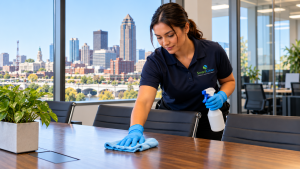
How Often Should a Commercial Building Be Professionally Cleaned?
There is no single cleaning schedule that works for every commercial property. However, building type, occupancy, and daily activity can provide a useful starting point.
Commercial Cleaning Considerations by Business Type
Different commercial environments present unique cleaning challenges. Understanding these differences can help business owners and facility managers determine what to discuss when evaluating professional janitorial services.
| Type of Facility | Important Cleaning Considerations |
|---|---|
| Small Offices | Number of employees, hybrid work schedules, shared workspaces, and restroom usage |
| Medium to Large Office Buildings | Daily occupancy, employee common areas, conference rooms, and high-touch surfaces |
| High-Traffic Commercial Properties | Visitor volume, entrances, shared facilities, and frequently used surfaces |
| Retail and Customer-Facing Businesses | Customer traffic, operating hours, entrance cleanliness, and public restrooms |
| Warehouses and Industrial Facilities | Shift schedules, dust and debris, employee facilities, and operational requirements |
| Medical and Healthcare Facilities | Patient traffic, treatment areas, and applicable infection prevention and cleaning protocols |
These considerations provide a starting point, but they don’t tell the whole story.
For example, two similarly sized office buildings may have very different cleaning requirements if one accommodates employees working remotely several days per week while the other welcomes customers and visitors throughout the day.
Seasonal factors can also influence cleaning needs. During cold and flu season, businesses may want to reevaluate how frequently high-touch surfaces and shared spaces are cleaned. Winter weather may create additional floor maintenance needs as employees and visitors track moisture, salt, and debris into the building.
What Factors Determine How Often Your Building Should Be Cleaned?
Before establishing a commercial cleaning schedule, consider the conditions that affect how quickly your facility becomes dirty and how frequently shared surfaces are used.
1. Building Occupancy and Foot Traffic
The number of people entering and using a building is one of the most important considerations.
A busy office with employees, clients, delivery personnel, and other visitors experiences more wear and soil accumulation than a facility with limited daily occupancy.
Higher traffic typically means more frequent attention to entrances, flooring, restrooms, and shared spaces.
2. Type of Business and Facility Use
Different industries have different cleaning priorities.
Corporate offices may focus on workstations, conference rooms, restrooms, and employee breakrooms.
Industrial facilities may require additional attention to dust, tracked-in debris, and heavily used employee areas.
Medical facilities have specialized cleaning and disinfection requirements that must follow applicable infection prevention procedures.
A cleaning schedule should reflect the activities taking place within the building rather than simply its square footage.
3. Shared Spaces and High-Touch Surfaces
Frequently touched surfaces deserve special consideration.
Examples include:
- Door handles, push plates, and light switches
- Elevator buttons and stair railings
- Conference tables and shared workstations
- Breakroom countertops and appliance handles
- Restroom fixtures and dispensers
- Reception counters and shared office equipment
According to the Centers for Disease Control and Prevention (CDC), high-touch surfaces should be cleaned regularly, with more frequent cleaning considered in high-traffic spaces.
A professional cleaning plan should identify these surfaces and establish how often they need attention.
4. Seasonal Conditions
Cleaning requirements can change with the seasons.
In Central Iowa, winter weather often brings snow, slush, road salt, and moisture into commercial buildings. These conditions can increase the need for entrance mat maintenance, floor cleaning, and attention to high-traffic areas.
Cold and flu season introduces additional considerations for frequently touched surfaces and shared spaces.
Businesses should periodically reevaluate their cleaning schedules as conditions change.
Daily, Weekly, and Periodic Commercial Cleaning Tasks
An effective commercial cleaning schedule doesn’t necessarily involve performing every cleaning task every day.
Instead, it prioritizes frequently used areas while scheduling deeper maintenance at appropriate intervals.
Daily Commercial Cleaning Tasks
For many occupied commercial facilities, daily cleaning priorities include:
- Cleaning and servicing restrooms
- Emptying trash and recycling containers
- Cleaning breakroom counters, sinks, and tables
- Cleaning frequently touched surfaces
- Vacuuming or mopping high-traffic floors
- Cleaning entrances and reception areas
- Addressing spills, visible dirt, and other immediate concerns
These tasks help maintain a consistent standard of cleanliness between more detailed cleaning visits.
Weekly Commercial Cleaning Tasks
Depending on the facility, weekly cleaning may include:
- Detailed dusting of accessible surfaces
- Cleaning lower-traffic offices and meeting rooms
- More thorough attention to corners and floor edges
- Spot cleaning interior glass and partitions
- Cleaning selected fixtures and furnishings
- Additional floor maintenance as needed
Some of these tasks may require more frequent attention in larger or busier buildings.
Monthly and Periodic Cleaning Tasks
Certain maintenance activities can be scheduled less frequently based on building conditions.
Examples include:
- Carpet extraction and deep cleaning
- Detailed floor care
- High dusting and cleaning difficult-to-reach areas
- Detailed interior glass cleaning
- Periodic deep cleaning of restrooms and common areas
- Seasonal entrance and floor maintenance
A well-designed janitorial program combines these cleaning frequencies into one coordinated plan.
Should Businesses Increase Cleaning Frequency During Cold and Flu Season?
Cold and flu season is a good time for business owners and facility managers to reevaluate their cleaning schedules, particularly in busy workplaces with shared spaces and frequently touched surfaces.
However, increasing cleaning frequency doesn’t necessarily mean doubling every janitorial service.
The more effective approach is to identify which areas may need additional attention.
When Additional Cleaning May Be Appropriate
Consider reviewing your cleaning schedule when:
- Employees frequently share workstations, meeting rooms, or equipment.
- Breakrooms and restrooms receive heavy daily use.
- Employee illness has increased.
- Customers and visitors regularly use shared spaces.
- High-touch surfaces are cleaned infrequently.
- Seasonal staffing or business activity increases building occupancy.
For example, a commercial office that receives professional janitorial service three evenings per week might benefit from daily high-touch surface cleaning during periods of increased illness.
A larger office with nightly janitorial service may instead benefit from additional daytime attention to restrooms, breakrooms, and shared equipment.
The appropriate response depends on the building’s conditions and existing cleaning program.
Cleaning and Disinfecting Are Not the Same Thing
Understanding the difference between cleaning and disinfecting is especially important during cold and flu season.
Cleaning removes dirt, impurities, and many germs from surfaces using soap, detergent, water, and physical action.
Disinfecting uses appropriate chemical products to kill remaining germs on surfaces when used according to product instructions.
The CDC’s facility cleaning guidance explains that routine cleaning is sufficient in many situations. Additional disinfection may be appropriate when someone has been ill or in certain high-traffic environments.
Disinfectants should be selected for their intended use, and surfaces generally need to be cleaned before disinfection. Products must also be used according to their labels, including any required surface contact time.
It’s also important to recognize that respiratory illnesses such as influenza spread primarily through respiratory particles. Surface cleaning is one part of a broader workplace health strategy that includes good hand hygiene, appropriate ventilation, and encouraging employees to stay home when sick.
Professional cleaning can support a cleaner workplace, but it cannot eliminate every risk of illness.
Signs Your Current Commercial Cleaning Schedule Isn’t Enough
Even businesses with established janitorial services can outgrow their cleaning schedules.
As employee counts increase, work arrangements change, or building use evolves, a previously adequate cleaning plan may no longer meet daily needs.
Here are several signs that your facility may benefit from more frequent professional cleaning.
Restrooms Require Attention Before the Next Scheduled Cleaning
Persistent odors, overflowing waste containers, visibly dirty fixtures, or recurring supply shortages may indicate that restroom servicing is not keeping pace with daily use.
Floors and Entrances Become Dirty Quickly
If entrances consistently accumulate dirt, moisture, or debris before the next cleaning visit, additional maintenance may be necessary.
This can be particularly noticeable during Iowa’s winter months.
Employees Regularly Report Cleaning Concerns
Repeated complaints about dirty breakrooms, dusty workstations, unpleasant odors, or poorly maintained common areas can indicate that cleaning frequency or task coverage needs to be adjusted.
Shared Areas Look Unclean Between Visits
Conference rooms, reception areas, and employee breakrooms should remain reasonably presentable throughout the workweek.
If these spaces deteriorate quickly between scheduled cleanings, they may require additional attention.
Your Business Has Grown or Changed
Adding employees, extending operating hours, increasing customer traffic, or expanding into additional building space can significantly affect cleaning requirements.
A schedule designed for your facility several years ago may no longer reflect how the building operates today.
If several of these situations sound familiar, it may be time to reassess your commercial cleaning plan rather than continuing with the same service frequency.
How to Create a Commercial Cleaning Schedule That Fits Your Business
A practical cleaning schedule should account for building conditions, business operations, and budget.
Start by evaluating how your facility is used.
Identify high-priority areas. Restrooms, entrances, breakrooms, reception areas, and other frequently used spaces often need the most consistent attention.
Review building occupancy. Consider employee schedules, visitor traffic, shift changes, and days when the facility is especially busy.
Separate routine cleaning from periodic maintenance. Daily upkeep, detailed weekly cleaning, and occasional deep cleaning serve different purposes.
Plan for seasonal changes. Winter weather, increased occupancy, and cold and flu season may create temporary cleaning demands.
Evaluate your current results. Look for recurring complaints, areas that become dirty between visits, and tasks that are consistently overlooked.
Work with a professional commercial cleaning provider. An experienced janitorial company can assess your facility and recommend a cleaning schedule based on its actual requirements.
A customized plan can also help businesses allocate their cleaning budgets more effectively by prioritizing the areas that need the most attention.
Professional Commercial Cleaning Services in Des Moines and Central Iowa
Whether your business needs daily janitorial services, several cleanings per week, or additional seasonal support, choosing the right cleaning partner can make building maintenance easier to manage.
SmartClean Iowa provides customized commercial cleaning and janitorial services for businesses throughout Des Moines and Central Iowa.
With more than 20 years of experience, SmartClean works with offices, commercial properties, industrial facilities, medical buildings, and other professional environments.
SmartClean’s services include routine janitorial cleaning, restroom and breakroom cleaning, floor care, high-touch surface disinfection, and other facility maintenance solutions.
As an ISSA Cleaning Industry Management Standard–Green Building (CIMS-GB) certified company with honors, SmartClean emphasizes documented cleaning processes, professional standards, and environmentally responsible practices.
Rather than recommending the same schedule for every property, SmartClean develops cleaning plans based on each facility’s needs, operating schedule, and budget.
Is Your Current Cleaning Schedule Meeting Your Building’s Needs?
Your commercial building deserves a cleaning plan that works as hard as your business does.
Whether you’re considering professional janitorial services for the first time, evaluating your current provider, or wondering if your building needs more frequent cleaning during cold and flu season, SmartClean Iowa can help.
Contact SmartClean Iowa to schedule a free facility walkthrough and request a customized commercial cleaning quote.
Frequently Asked Questions About Commercial Cleaning Frequency
How many times per week should an office be professionally cleaned?
Many medium and large offices benefit from professional cleaning five days per week, while smaller offices with limited traffic may only need service two or three times weekly. Restrooms, shared surfaces, and other high-use areas may still require daily attention between professional visits.
Is professional office cleaning necessary every day?
Not every office needs a professional cleaning crew every day. The appropriate frequency depends on occupancy, foot traffic, building size, and how quickly shared spaces become dirty. High-traffic offices typically require more frequent service than small, lightly used facilities.
Should businesses increase cleaning during flu season?
Businesses should evaluate their cleaning frequency during cold and flu season, particularly in shared spaces and high-traffic areas. Additional high-touch surface cleaning or targeted disinfection may be appropriate depending on building use and whether someone has been ill.
What’s the difference between routine commercial cleaning and deep cleaning?
Routine commercial cleaning focuses on recurring tasks such as restroom maintenance, trash removal, surface cleaning, and floor care. Deep cleaning addresses accumulated soil and areas requiring more intensive attention, such as carpets, floor edges, fixtures, and less-accessible surfaces. Both can be part of a comprehensive janitorial plan.
How often should commercial restrooms be cleaned?
Commercial restrooms generally need daily attention in occupied facilities, with additional servicing throughout the day when traffic is heavy. Cleaning frequency should reflect the number of users, restroom conditions, and any industry-specific requirements.
Can a commercial cleaning company customize a cleaning schedule?
Yes. Professional commercial cleaning companies can develop schedules based on building size, occupancy, operating hours, cleaning priorities, and budget. SmartClean Iowa offers customized janitorial plans for commercial facilities throughout Des Moines and Central Iowa.